NASA mission unlocks more secrets about Jupiter
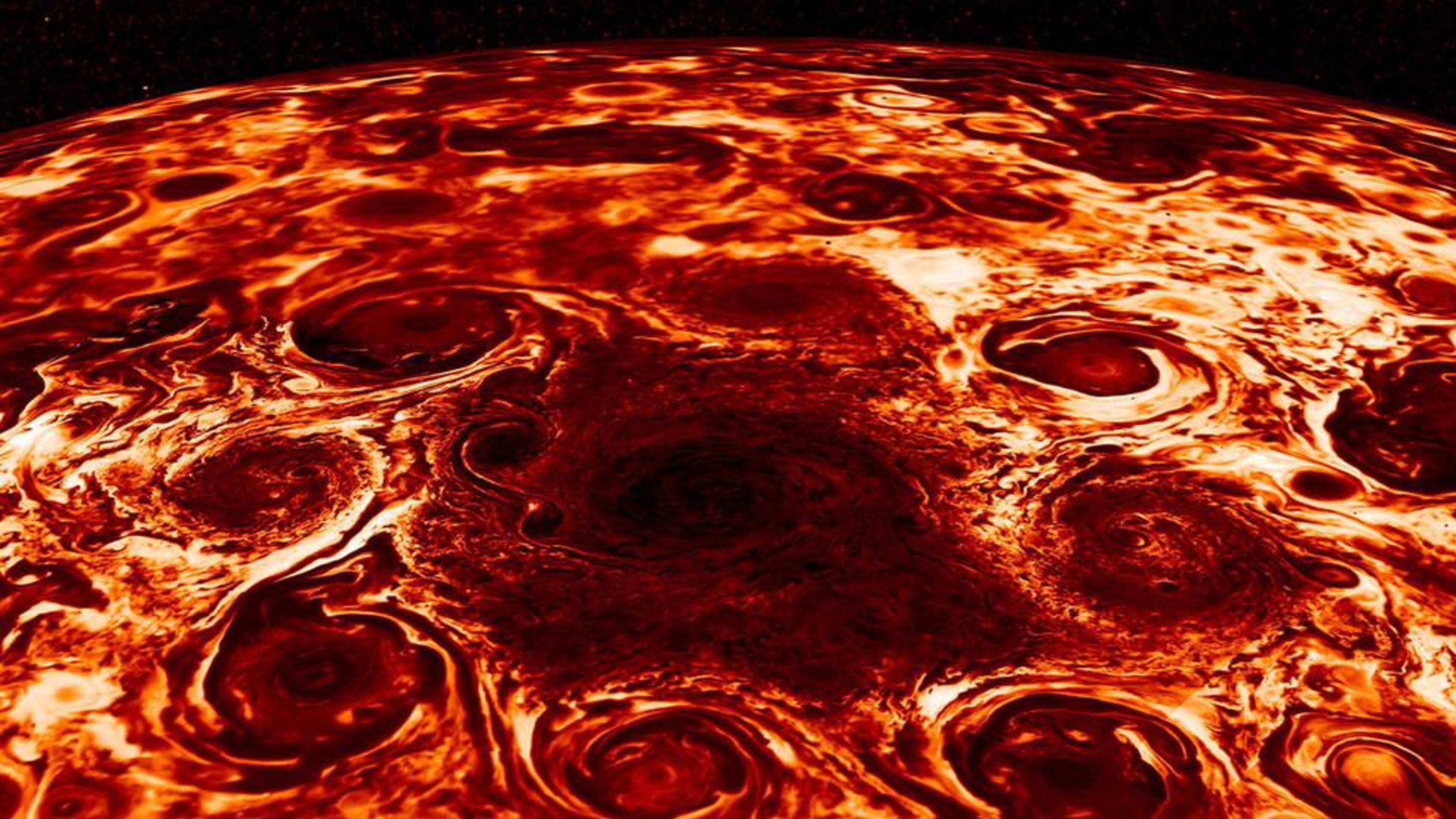
Information compiled by the Juno space mission to Jupiter shows that the atmospheric winds of the solar system's largest planet run deeper than had originally been thought, NASA reported on its website.
Other data released Wednesday revealed that the massive cyclones that surround Jupiter’s north and south poles are unique to the solar system. The findings are part of a four-article series that will be published in the March 8 edition of the journal, Nature, NASA said.
“These astonishing science results are yet another example of Jupiter’s curve balls, and a testimony to the value of exploring the unknown from a new perspective with next-generation instruments. Juno’s unique orbit and evolutionary high-precision radio science and infrared technologies enabled these paradigm-shifting discoveries,” said Scott Bolton, principal investigator of Juno from the Southwest Research Institute in San Antonio. “Juno is only about one third the way through its primary mission, and already we are seeing the beginnings of a new Jupiter.”
More Stories
The Latest

