Experts wonder how federal tax credit scholarships will impact Georgia schools


Public school systems in Georgia are exploring whether they can tap a new well of funding starting in 2027: the first-of-its-kind federal tax credit scholarship program.
Federal lawmakers created the program as a way for families to pay for things like private school tuition, tutoring, special education services and more. It could be a new revenue steam for cash-strapped public schools — or a drain on their budgets. It’s called the Education Freedom Tax Credit.
The program is uncapped, meaning every taxpayer in the country could donate if they wished. By 2030, it could rake in $26 billion annually — enough to support millions of students nationwide, according to estimates from the U.S. Treasury and Internal Revenue Service. In time, it could become the largest federal resource accessible for those students, according to some experts.


It’s expected to be a boon for private schools, which can draw in more students with the promise of additional financial aid. But predictions are hazier for public schools.
Some advocates say public school districts are sitting on massive donor bases made up of employees and parents, and have the potential to raise millions in additional funding for tutoring and more. But others say this program will siphon students out of public schools, which are already experiencing enrollment declines, and into private ones. Public schools in Georgia are funded on a per-pupil basis, so fewer students means less money.
In metro Atlanta, school districts are trying to figure out whether they should opt in.
Paige Buzbee, executive director of the Georgia Foundation for Public Education, which administers a grant program that works similarly to the tax credit scholarship, describes herself as a pragmatist.
“This is the reality,” she said. “How can we make things great for schools?”
Lessons learned in Georgia
More than 30 states, including Georgia, have opted in to the program, which was part of the One Big Beautiful Bill Act passed last year. Education leaders in those states have spent the last few months trying to envision how the potentially massive program will work — how will the money be collected and distributed, who will get the funding, what it will be used for?

Georgia may have a leg up on the other states. It’s no stranger to tax credit scholarships, educations savings accounts and voucher programs — including one that benefits public schools.
The Peach Education Tax Credit was established in 2018 to provide grants to public schools. It allows individual donations, as well as large donations from companies. This year, the program was capped at $25 million in donations, and Buzbee expects they’ll hit that mark.
The federal tax credit scholarship is a little different: The funding must be tied to individual students, rather than to a program. So if a public school wanted to use the funds for after-school tutoring, for example, the funding would be assigned on a per-pupil basis, and every student who receives the services funded by the scholarship must meet the income requirements.
“But it means that there’s awareness of a program that supports public schools, like a tax credit. You have less of this information barrier than you do in other states,” said Maggie Cicco, a senior research fellow at the Edunomics Lab at Georgetown University.
Georgia in general has seen a lot of momentum around private school vouchers in recent years, said Georgia Budget and Policy Institute senior education analyst Ashley Young, with the federal program being just the most recent. It’s not necessarily a good thing.

“I would argue that this program will not ultimately help at all. It will actually be just the antithesis of that,” Young said. “This program does not at all directly provide revenue to Georgia school districts. … (There are) many areas that are flailing in our public school systems that could use help.”
Rising costs and declining enrollment have spelled budget trouble for Georgia public schools in recent years. Some metro Atlanta districts have decided to close schools or cut staff to deal with the pressures. Young said a new — potentially huge — tax credit scholarship will likely exacerbate the issue.
Further, the nature of the program will make it hard for school systems to budget, with no guarantee that the funds will be there year to year. Gov. Brian Kemp opted Georgia into the program — but states will have to do so annually to continue participating in the program. Gov,-elect Keisha Lance Bottoms could choose not to opt the state in again after she takes office in January.
The concept of vouchers arose in the U.S. to support segregation academies, or private schools designed to keep white students out of integrated schools after the landmark Brown v. Board of Education U.S. Supreme Court decision in 1954, Young said. Critics fear the federal program will increase segregation in schools.
“What we’re doing is essentially undermining our public good, which is public schools,” she said.

Bracing for impact
For those same reasons, the federal tax credit scholarship is not a policy that Fred Jones, the senior director of public policy and advocacy at the Southern Education Foundation, would have drawn up himself.
“We’ve adamantly opposed school vouchers for decades,” Jones said. But 15 of the 17 states in their coverage area have already opted in. “If states are opting in … public school students should benefit the most from the program.”
That’s why the group is building an alliance of scholarship-granting organizations that will focus on securing the funding for students attending public schools. The alliance will focus on high-impact tutoring as an area where investment could pay off. The new program doesn’t include quality standards, Jones said, which is a priority for the Southern Education Foundation.
The Georgia Foundation for Public Education will work with state public schools to access the federal dollars specifically, while other groups that used to work exclusively with Georgia private schools are gearing up to work with private and public schools across the country.
A spokesperson for the Fulton County School District said it’s “exploring” the recent guidance about the program, but hasn’t made any decisions yet. Spokespeople in other metro Atlanta school districts gave similar statements to the AJC.
Cobb County is “pursuing” the program and will share more information in the future. City Schools of Decatur will go through a community engagement process before deciding anything. And Marietta City Schools and the Clayton County School District are working with the Georgia Foundation for Public Education to figure out their options.
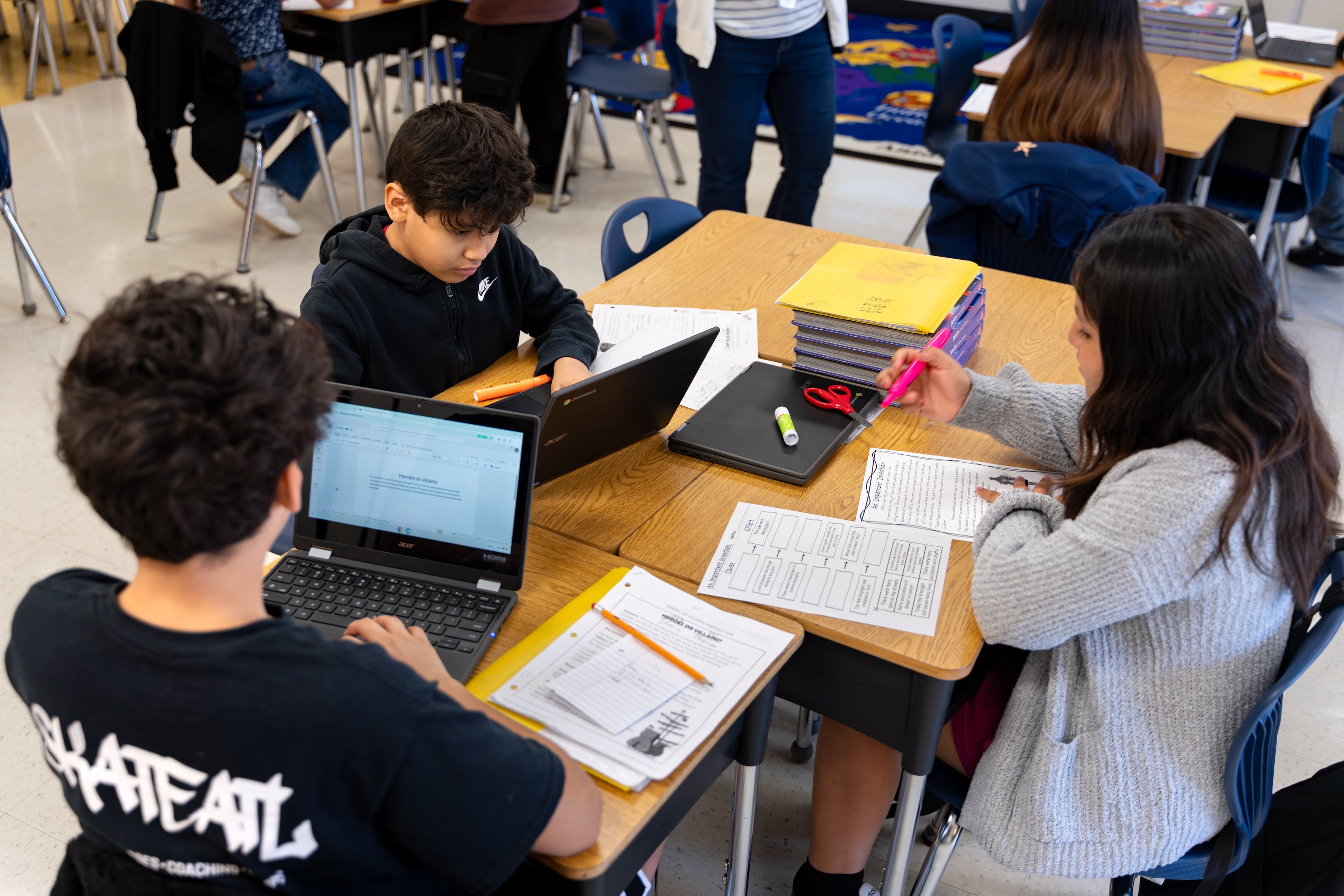
School systems and other employers may set up direct donation options for employees, so money that would usually come out of their paycheck for federal taxes would instead go to a scholarship-granting organization. It could then come back to school systems to offset costs for services for students with disabilities, provide transportation or pay for books or supplies. Some scholarship-granting organizations could collect and distribute donations for specific programs or types of students.
“It’s a little confusing out of the gate,” Buzbee said. “It’s just a learning curve, but we’ll get there.”
School choice programs in Georgia
Georgia Special Needs Scholarship: This voucher program was started in 2007. It allows students with disabilities to use their allocation of state funding to pay for private school tuition and fees.
Qualified Education Expense Tax Credit: Started in 2008, it provides a dollar-for-dollar state tax break for donors and private school scholarships to students. It is capped at $120 million per year. Individuals and corporations can make donations.
Peach Education Tax Credit: Established in 2018, it allows individual donations, as well as large donations from companies, in return for state tax breaks. It provides grants to public schools for various projects.
Georgia Promise Scholarship: It began in 2025 and provides $6,500 awards to students who are zoned to attend low-performing public schools. This program is an education savings account, not a tax credit. Up to $120 million of the state education budget can fund scholarships each year.
Federal tax credit scholarship: Starting in 2027, individuals can make donations of up to $1,700 to scholarship-granting organizations in return for a tax credit. The funds will be used to help public and private school students pay for education expenses.