In Atlanta’s Grove Park, a shuttered historic theater will be restored
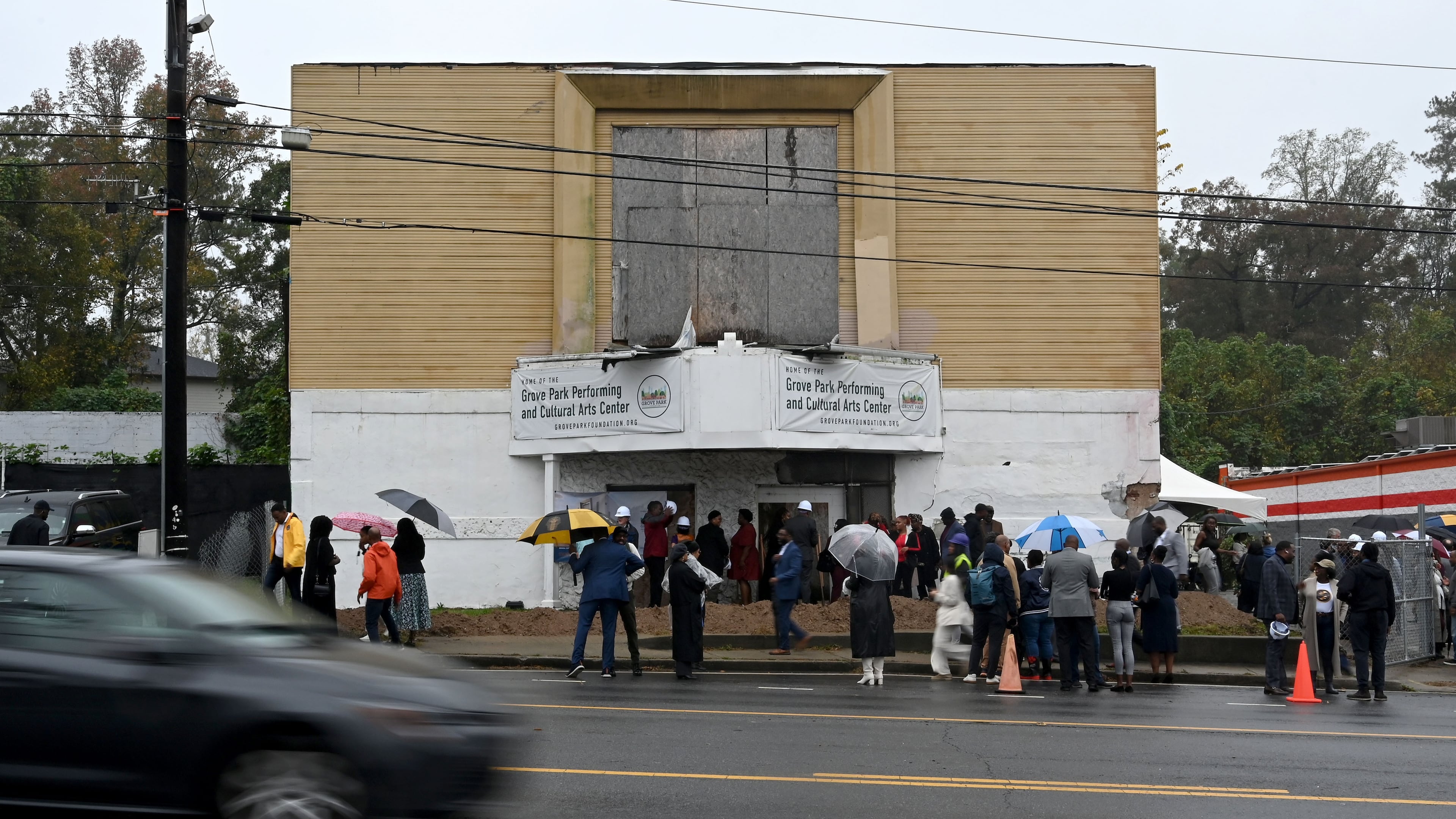

What once was an eyesore on Atlanta’s vibrant Westside will soon be reborn into a space for arts and culture programming.
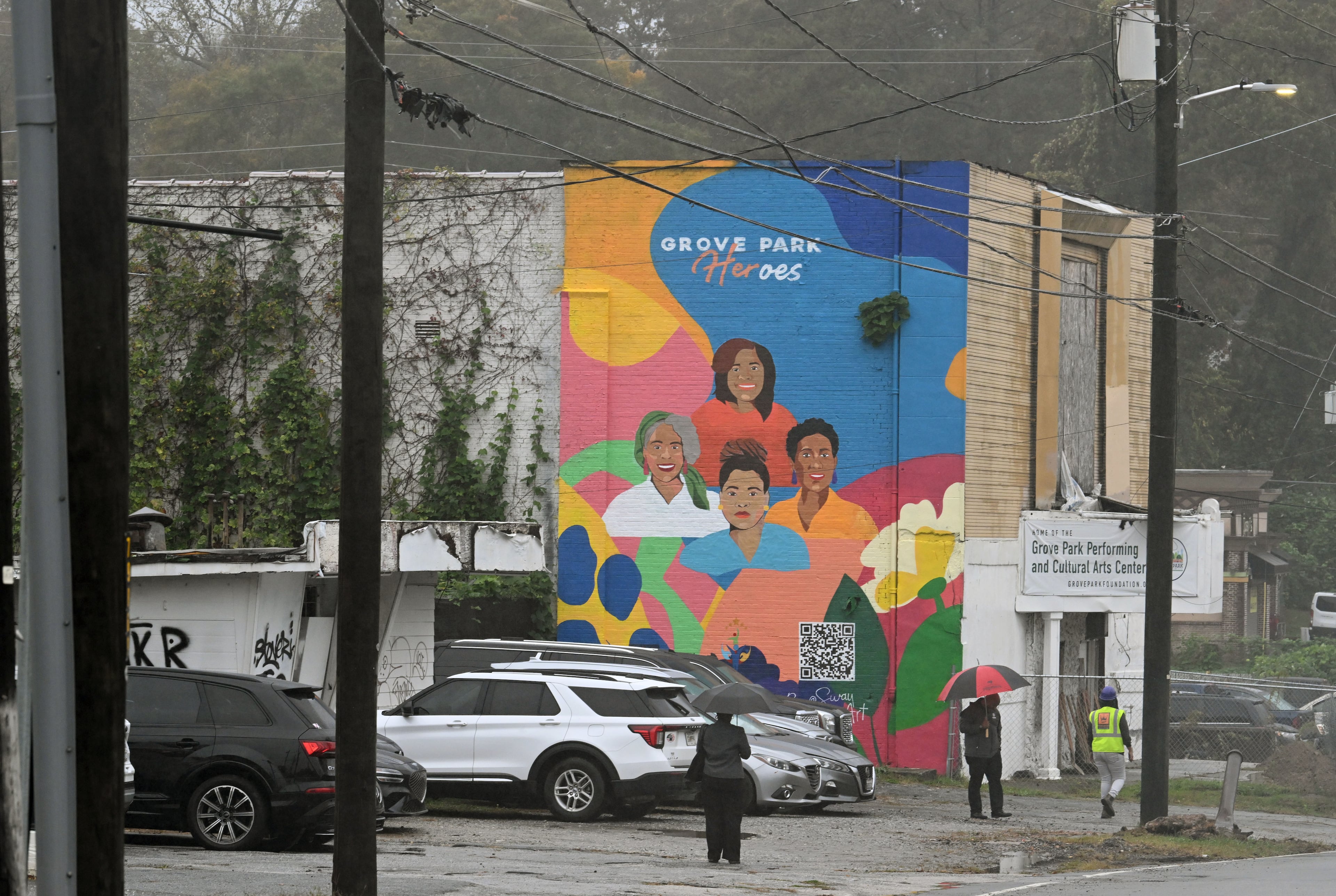
The Grove Park Foundation has begun restoring the long-shuttered Grove Theatre along Donald Lee Hollowell Parkway, a milestone in a nearly 10-year journey to revitalize the historic structure.
The empty building, which had fallen into disrepair by the time the nonprofit acquired it in 2017, will soon become flexible space for the visual and performing arts, as well as for hosting events, community meetings and other gatherings, with up to 300 seats.

A groundbreaking ceremony was held in the pouring rain on Wednesday, with one speaker remarking that rain brought good luck. The $5.4 million project is expected to open in late 2027.
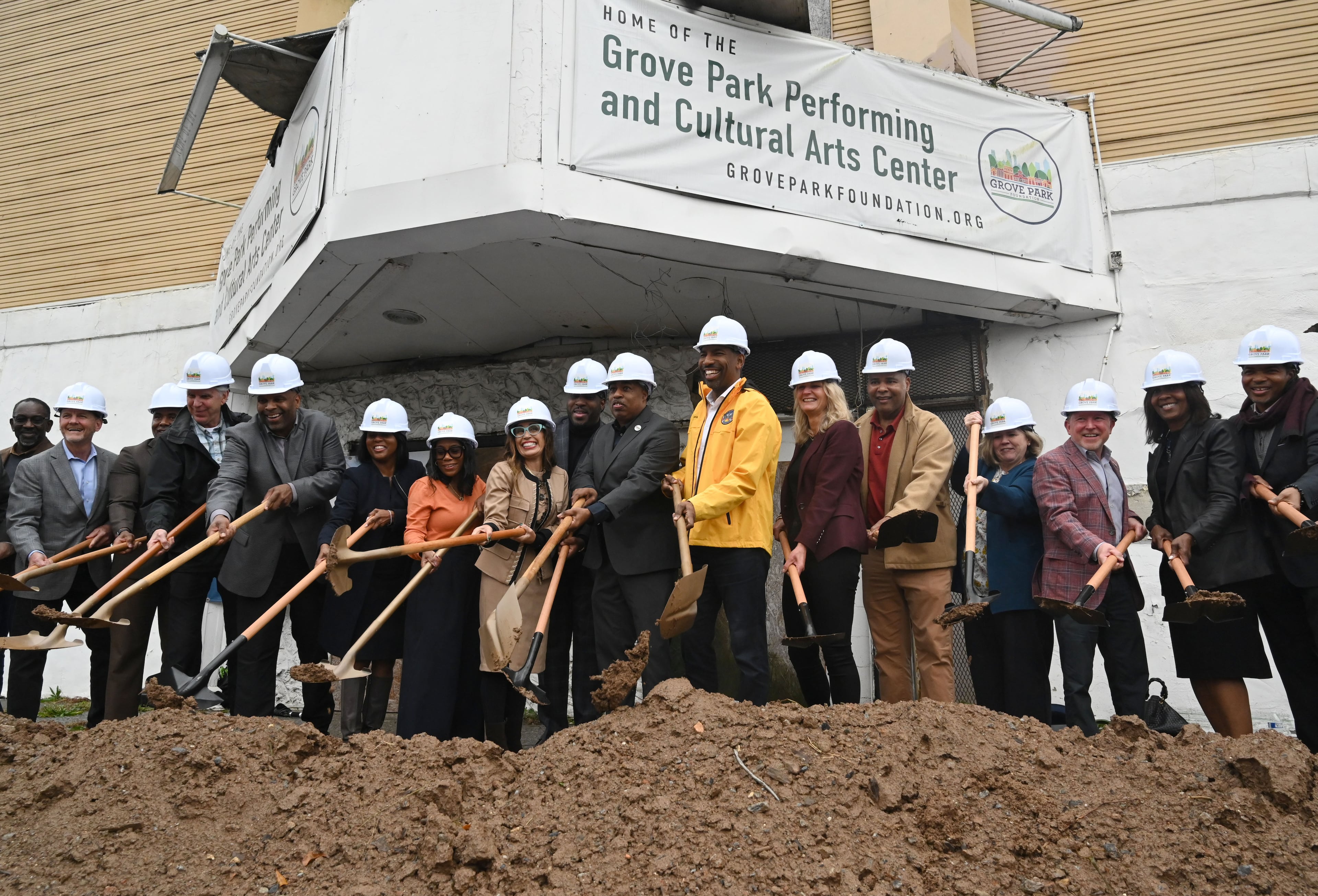
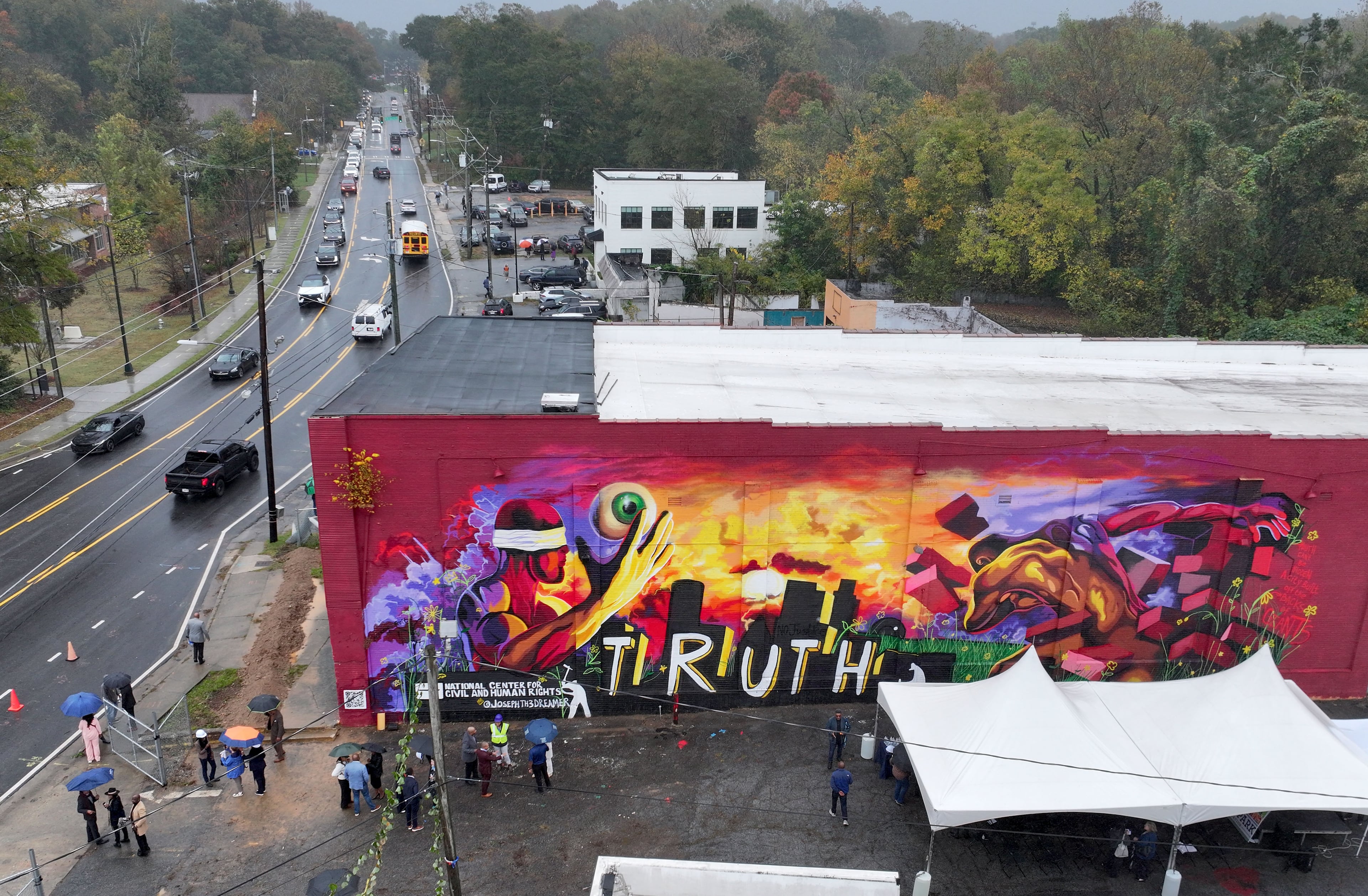
The nonprofit, which focuses on revitalizing and improving the quality of life in Grove Park. Gavin McGuire, the Grove Park Foundation’s executive director, said he hopes the revived space will serve as a catalyst for future growth and development in the neighborhood.
“(We’re) making sure that our residents are here to enjoy all these great amenities because they’ve toiled for so long when these amenities were blighted,” McGuire said. “The intersection of community, culture and commerce is what the theater represents.”
The building has lived many lives in its 85-year history. It opened as a 618-seat theater in 1941, showcasing many of the era’s popular titles, including 1959’s “Operation Petticoat” and reissues of “Gone With the Wind.” It was one of several historic theaters in the city, though it was not open to everyone. The theater was segregated.
The theater shuttered in 1969. It eventually became a roller skating rink, and then a pawn shop.
“A lot of ills and a lot of emotion were tied to that,” McGuire said.
The foundation acquired the building in 2017. In the years following, the nonprofit held community meetings to solicit input from residents about what they wanted to see in a community gathering space.
The nonprofit was challenged by the tough funding environment. There are a number of needs across metro Atlanta, the state and country, and not enough philanthropic dollars to go around. The foundation didn’t want to take on debt, costs that they would have to pass onto the community.
In the meantime, the nonprofit completed other projects in the neighborhood with partners, including 110 units of affordable housing, a school and a public health clinic.
“With that, the question was, what’s the third space in the community? The place for entertainment, arts education and arts exposure?” McGuire said. “The theater represents that.”
Bank of America and Chick-fil-A committed a combined $2 million, accounting for about half the overall budget. About $1.2 million is coming from tax increment financing, a mechanism used across the city that allocates increases in future property tax revenues to pay infrastructure or other development costs within a designated area.
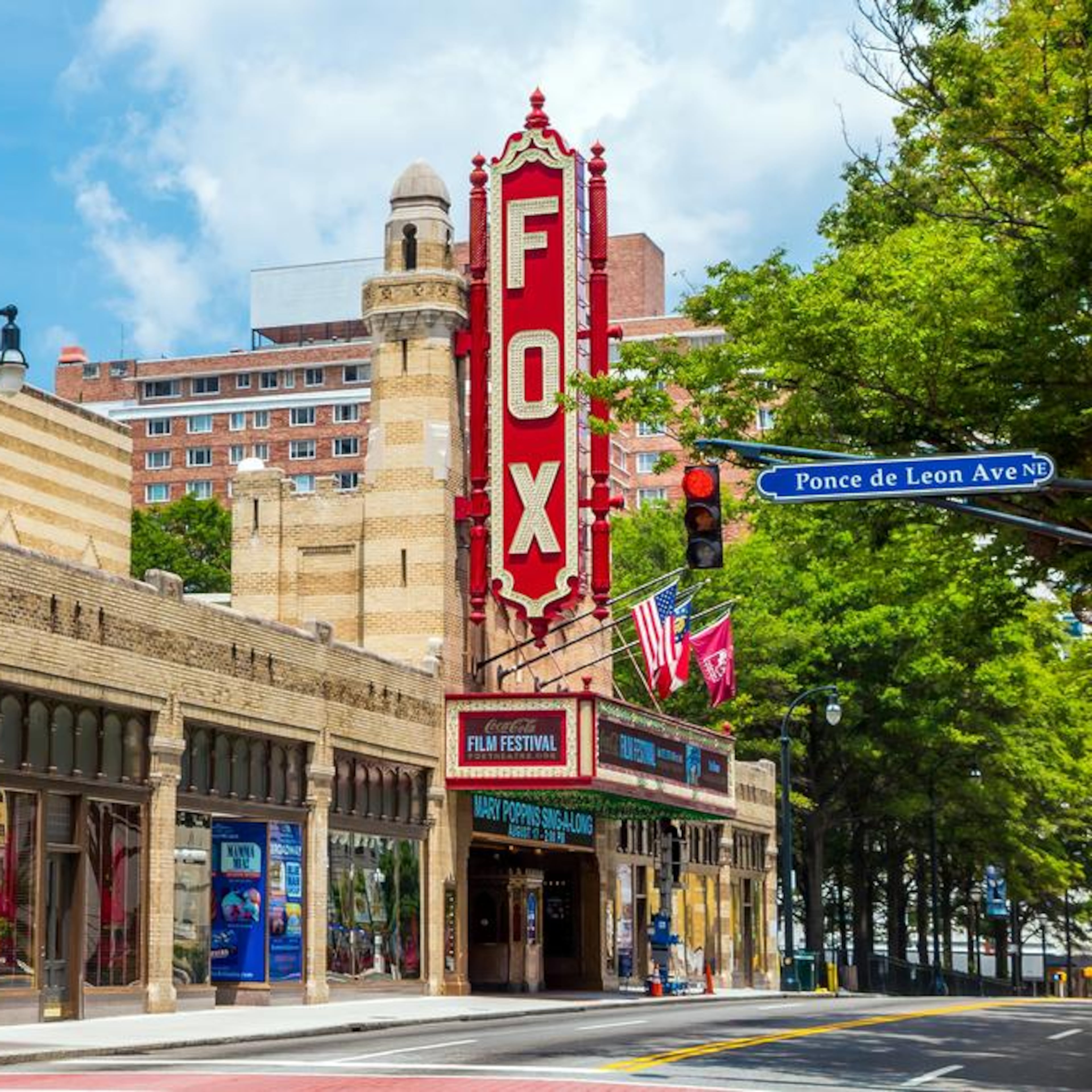
Grants totaling about $240,000 from the Fox Theatre’s philanthropic arm and matched by The Kendeda Fund, prior to its 2023 closure, helped cover pre-development costs, such as historical preservation studies, early site demolition and, importantly, replacing the roof, which would’ve otherwise collapsed during planning.
The theater isn’t on the historic register — not enough of the original structure remained while the Foundation was completing its initial study.
“But in 200 years, it will be on the (register),” McGuire said. “That’s the goal.”